Clutchless shifting: how it works and when to skip it
Riders argue about it endlessly. Here is what actually happens inside the gearbox, what is fine, and where you can hurt the bike or yourself.
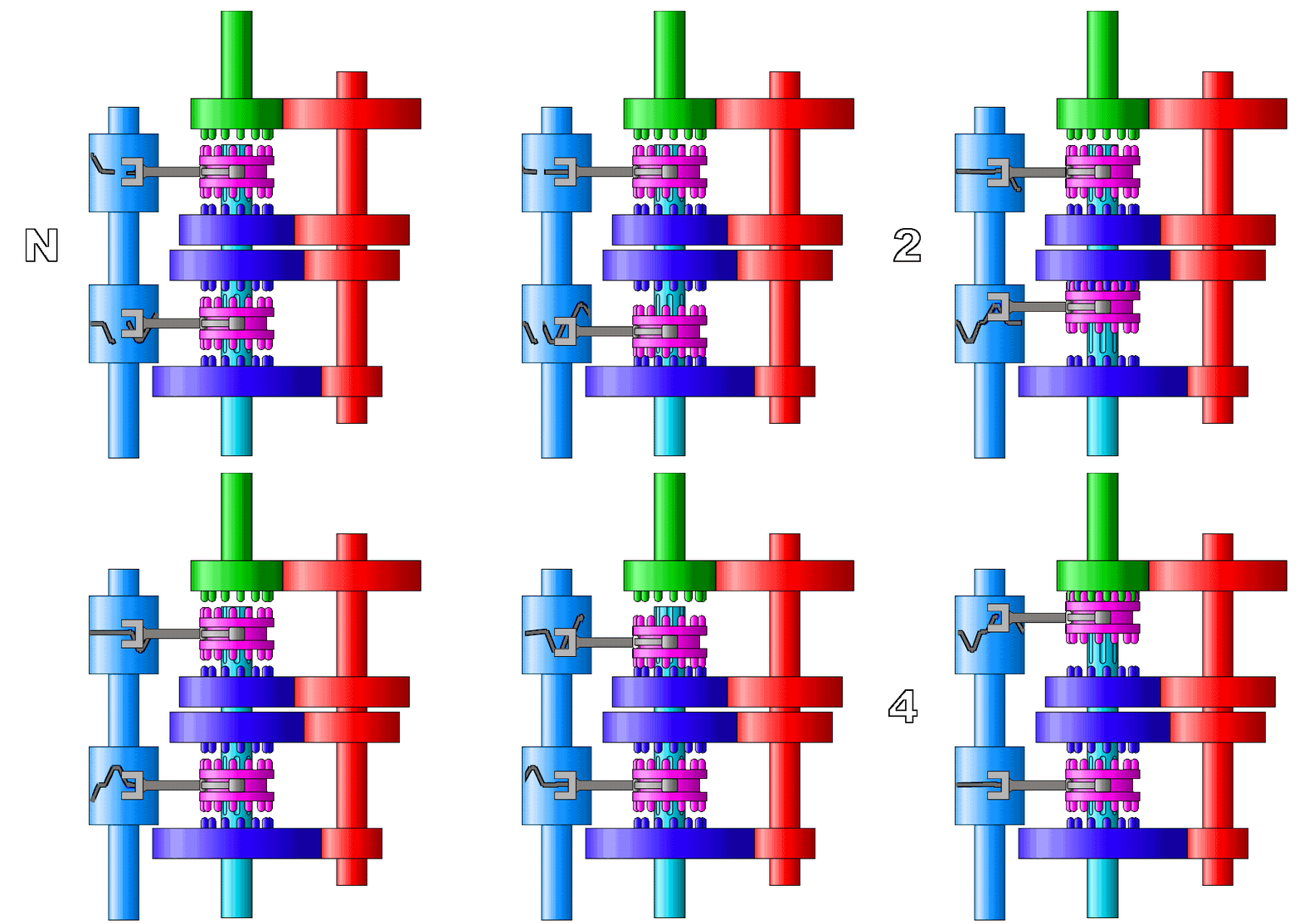
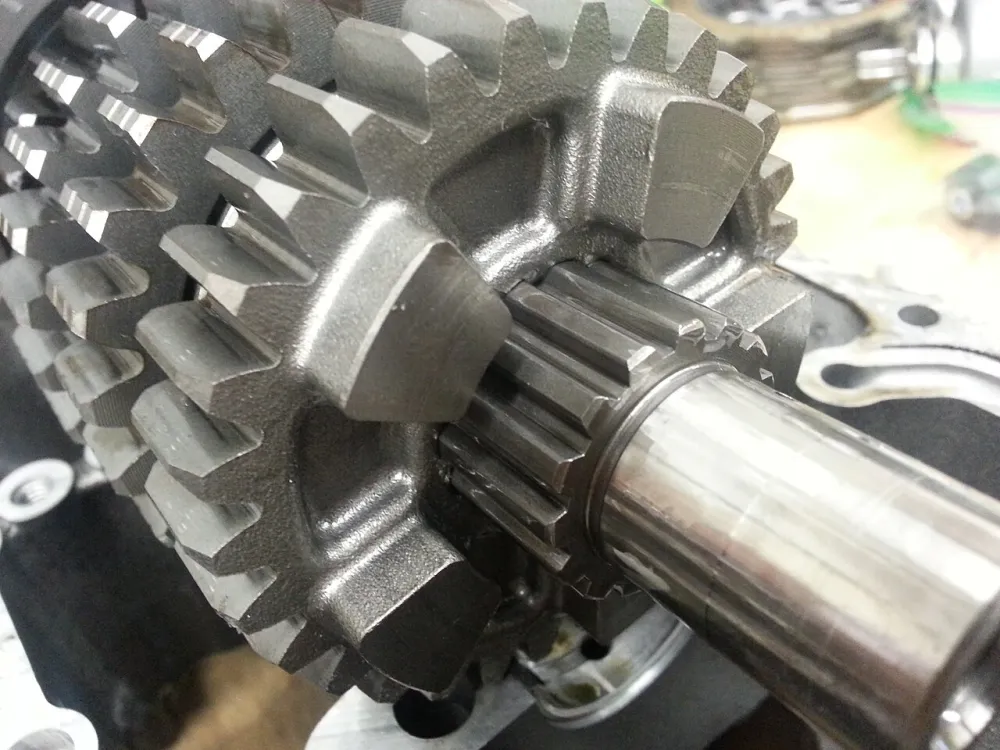
A sequential gearbox. The shift fork (grey) slides a ring of dogs (pink) into the next gear. There is no synchroniser, so the dogs simply have to line up and drop in. Image: XyKyWyKy · CC0Real gearbox gears (Honda CBR600RR teardown). The chunky square lugs on the gear face are the dogs. Worn or rounded corners make shifts harder. Image: Spheroidite · CC BY-SA 4.0
Steps
Know why it works. A motorcycle gearbox has no synchronisers like a car. Gears are locked to the shaft by dogs, which are chunky lugs that slot into matching gaps. They are built for fast, repeated load changes.
Upshift: keep the throttle on, ease off it for a moment as you press the shift lever up, then roll back on. Unloading the dogs for that instant lets them slide out and into the next gear. Do it smoothly, do not stab at the lever.
Downshift method 1, rev matching: close the throttle, blip it up as you press the lever down, so the engine speed matches the speed the lower gear needs. Release smoothly. It takes practice, and a bad blip gives a jerk or a rear-wheel skid.
Downshift method 2, passive syncing: as the bike slows, hold light steady pressure on the lever. When engine and wheel speed come close, the gear drops in by itself. The dogs are angled to self-align, so it is gentle if you stay patient.
Practise on a quiet, dry, straight road at low speed first, never in traffic or in a corner.
Common mistakes
Clutchless on a cold engine. Thick cold oil makes the dogs slow to engage. Ride a few minutes first.
Forcing it when the RPM does not match. Mismatched speed, not the lack of a clutch, is what damages the gearbox and locks the rear wheel.
Doing it hard on an old or abused bike: bent shift forks, rounded dogs or a gearbox that already jumps out of gear. Use the clutch there.
Downshifting clutchless on wet or loose roads. A wrong match can lock the rear tyre and slide you out.
Missing the gear on a 1-N-2-3-4 pattern. Many commuter bikes have neutral between 1st and 2nd, and a lazy clutchless 1-to-2 shift can land in neutral. Use the clutch for that one.
When to go to a mechanic
The bike jumps out of gear, or the lever feels notchy or stuck: shift fork or dog wear.
Loud crunching or clunking on every shift, or it will not find neutral.
Gear oil or engine oil is low or old. Fix that first; oil level and quality matter a lot for smooth shifts.
This is general guidance for typical commuter motorcycles. Your owner's manual is the final word on pressures, intervals and oil grades for your bike. If you are unsure, ask a trusted mechanic.